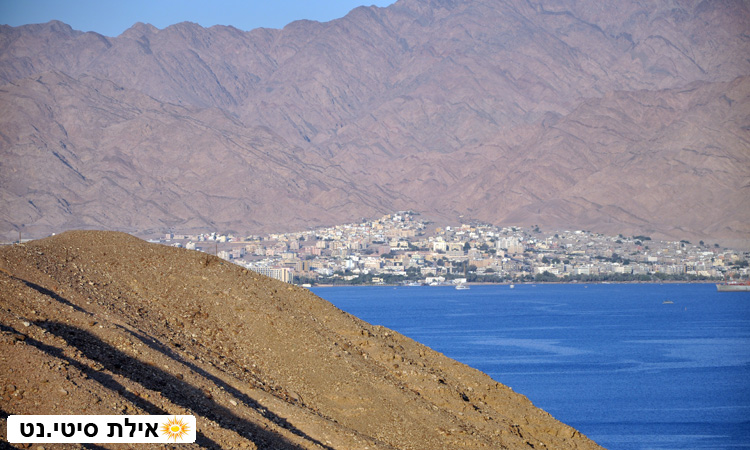
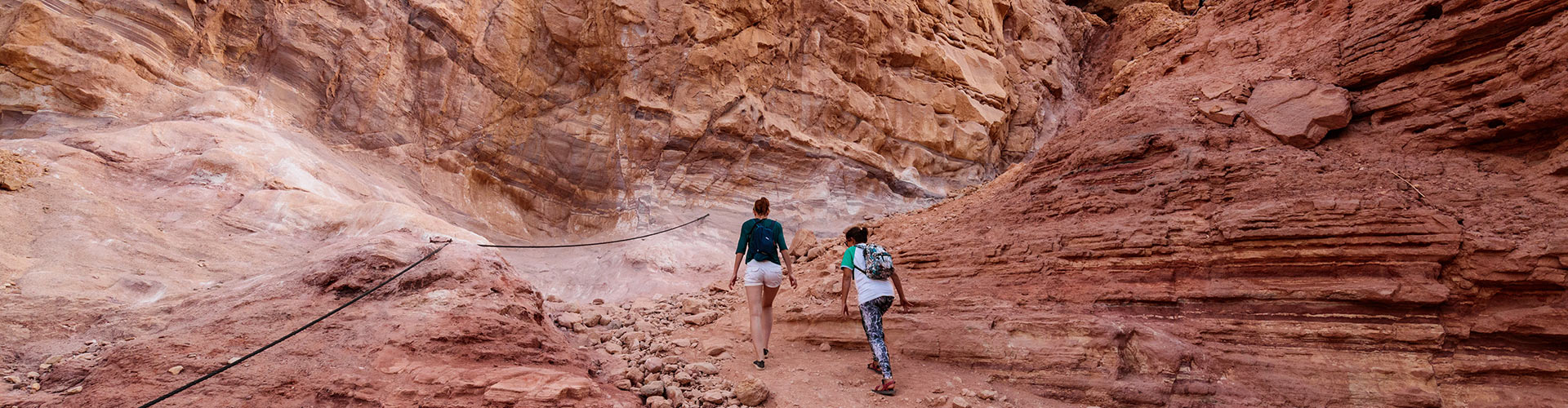

Eilat, Israel's southernmost city, is located in a desert area, and is a beautiful spot between the mountain ridge off the coast of Eilat and the Red Sea. The city connects the borders of neighboring countries, Egypt and Jordan, and is on a point of the Great Rift Valley, which stretches from the Zambizi River in Africa all the way to Syria. Eilat sits at 29 degrees latitude, part of the belt of the Sahara deserts and the Arabian Peninsula. As a result, this the area is characterized by its resemblance to the Saharo-Arab Belt. Two climate is bi-seasonal in Eilat - a long dry season (summer lasts from eight to nine months), and a short winter season, with an average precipitation of 30 mm per year. Average annual temperature is about 26 degrees and average humidity about 39%. Eilat's vegetation is similar to that of the Sudanese region. The mountain ridge surrounding the city was named after it and most of the region's rocks are foundation rocks. The gulf itself is a natural habitat for thousands of fish and corals and water salinity is highest in the world in open seas. Fauna characteristic to the Eilat area are desert animals. The diverse array of animals includes insects, birds, reptiles, mammals and predators like foxes, hyenas and felines, with mostly nocturnal creatures. The Arava Desert is considered one of the best birdwatching areas, because of the hundreds of species of migrating birds passing over it during the migration season. The city currently has about 50 thousand inhabitants. Only about 30% are of the long and constant, while an estimated - 70% are temporary or new residents.
Geology geography and demography Eilat
Geology geography and demography of Eilat